There is something quietly extraordinary about encountering a giraffe in the wild. Towering yet graceful, they move with a pace that feels almost unhurried, a reminder that safari is as much about stillness as it is about spectacle. For many travelers, seeing giraffes is a defining moment of their journey, and knowing where to go can shape that experience entirely.
East Africa remains home to some of the best places to see giraffes in Africa, where open landscapes, thriving ecosystems, and conservation-led tourism allow these iconic animals to flourish. From Tanzania’s vast plains to Kenya’s conservation-driven private reserves and Uganda’s conservation strongholds, these destinations bring not just sightings but meaningful, well-contextualized encounters.

Not all giraffes are the same, and understanding the differences between subspecies adds an extra layer of depth to your safari:
Each subspecies has distinct markings and habitats, making it possible to experience different variations across a single East African journey.

Giraffes can be seen year-round across East Africa, but seasonal conditions influence visibility and movement:
As non-migratory animals, giraffes remain a consistent highlight regardless of timing.

East Africa’s ecosystems are particularly well-suited to giraffes, with expansive savannahs dotted with acacia trees, their preferred food source. The region is also home to distinct subspecies, including the Masai giraffe in Tanzania and southern Kenya, the reticulated giraffe in northern Kenya, and the endangered Rothschild’s giraffe in Uganda.
What sets these destinations apart is not just density, but the quality of sightings. Lower vehicle density in private concessions, expert guiding, and conservation-focused management all contribute to more engaging experiences.

Tanzania delivers giraffe sightings on a grand scale, where the openness of the landscape transforms each encounter into something exceptional. Here, giraffes are rarely the sole focus; instead, they form part of a broader ecosystem that happens across plains, woodlands, and seasonal rivers.
This sense of scale allows sightings to feel organic rather than orchestrated. You begin to notice patterns, how giraffes move between feeding areas, how they interact within loosely structured groups, and how light shapes each moment. It’s this layered experience that places Tanzania firmly among the best places to see giraffes in Africa.
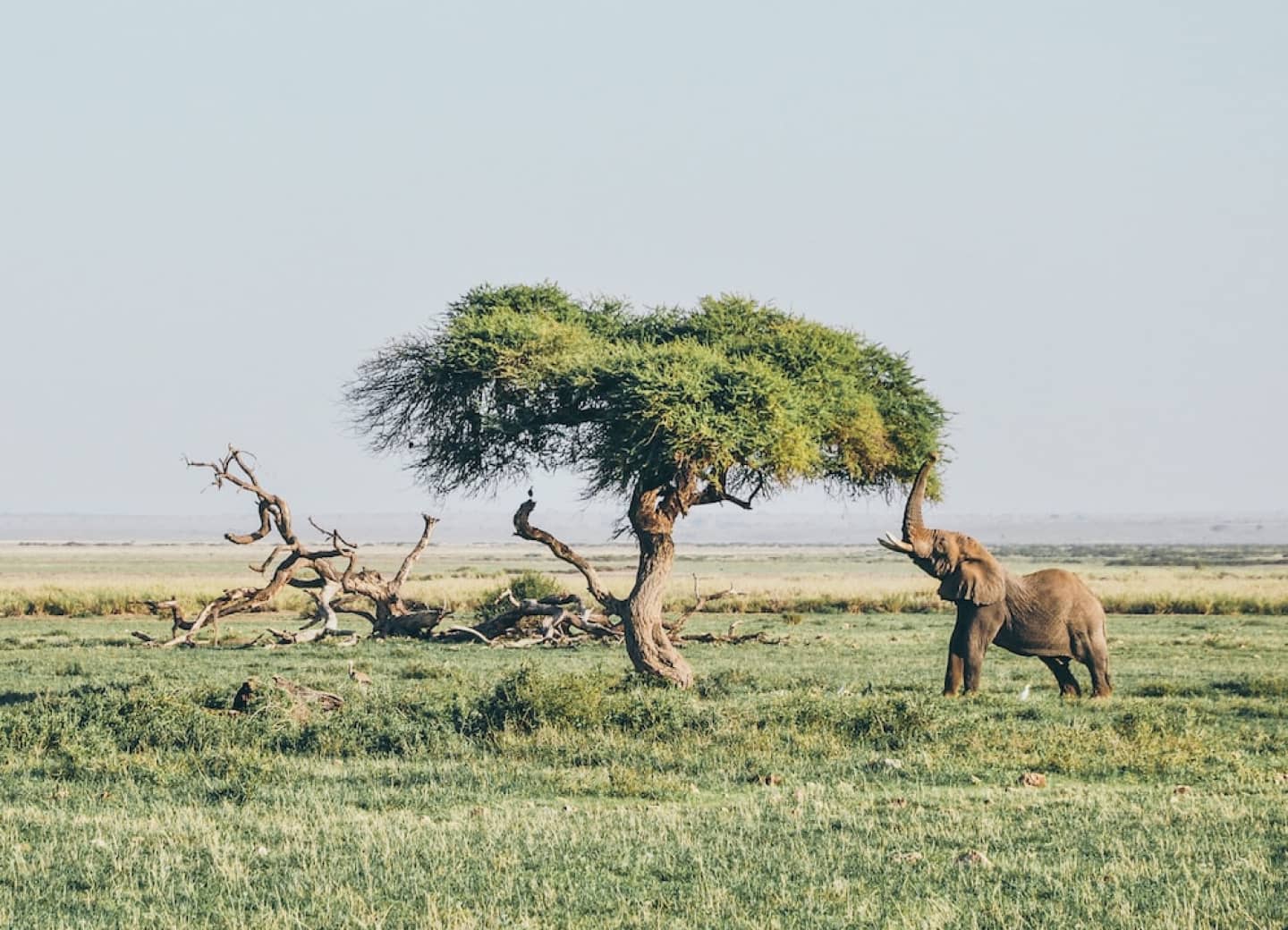
The Serengeti National Park has one of the most complete giraffe-viewing environments in Africa. Masai giraffes are widely distributed, but the most rewarding sightings tend to occur in transitional habitats where acacia woodland meets open plains – ideal browsing territory.
What defines the experience here is perspective. Giraffes are often seen as part of a wider scene, moving alongside migrating herds or silhouetted against vast horizons. These are not isolated sightings, but moments within a living system, making this one of the best places to see giraffes for those drawn to scale and context.
Tarangire National Park is one of Tanzania’s most quietly rewarding parks for giraffe sightings. Anchored by the Tarangire River, the park draws large concentrations of wildlife during the dry season, creating consistent and accessible viewing opportunities.
Giraffes are frequently seen browsing among acacia stands or moving between water sources, often framed by ancient baobab trees. With fewer vehicles and a slower pace, sightings feel more considered and less time-bound, a defining quality of the best places to see giraffes in Africa.
Lake Manyara National Park has a more intimate and varied setting, where giraffe sightings are shaped by a mosaic of habitats. From groundwater forest to open floodplains, the diversity of terrain creates dynamic and often close-range encounters.
Giraffes are typically seen along habitat edges, where forest transitions into open space. These moments (animals stepping into filtered light or moving quietly beneath the canopy) add nuance and detail.

Ruaha National Park introduces a more remote and untamed dimension to giraffe viewing. As one of Tanzania’s largest national parks, it brings a sense of space and wildness that is increasingly rare, with minimal crowds and vast, uninterrupted landscapes.
Giraffes are well established here, often seen moving through baobab-dotted terrain or gathering along the Great Ruaha River. Sightings feel raw and unfiltered, shaped by the rhythm of the environment rather than the presence of vehicles. For seasoned travelers or those seeking depth beyond the northern circuit, Ruaha stands out.

Kenya has a more refined and access-driven giraffe experience, where conservation and private land management play a central role. While national parks provide strong sightings, it is the network of private conservancies that brings incredible wildlife viewing.
Fewer vehicles, expert guiding, and strong conservation frameworks create an environment where sightings can happen naturally and without pressure. Combined with the presence of multiple giraffe subspecies, Kenya firmly holds its place among the best places to see giraffes in Africa.
The Masai Mara National Reserve is one of the most reliable destinations for giraffe sightings, with Masai giraffes commonly seen across its open plains and woodland areas. Their presence is steady, making them a consistent feature of game drives.
The surrounding conservancies elevate the experience significantly. With limited vehicle numbers and off-road access, sightings are longer and more engaging, allowing for a deeper understanding of their behavior.
Amboseli National Park has one of the most visually iconic settings for giraffe sightings in Africa. With Mount Kilimanjaro rising in the background, encounters here are defined as much by scenery as by wildlife.
Giraffes are frequently seen moving across open plains or feeding on acacia trees, often with uninterrupted views across the landscape. The clarity of the terrain makes sightings easy and rewarding, while the dramatic backdrop adds a photographic quality that secures Amboseli’s place among the best places to see giraffes in Africa.
Samburu National Reserve and the northern conservancies have a distinctly different giraffe experience. This is the stronghold of the reticulated giraffe, known for its sharply defined, geometric coat pattern.
The semi-arid landscape, combined with fewer visitors, creates a more intimate and visually striking setting. Sightings often feel more personal, guided by experts with deep local knowledge.

Nairobi National Park brings a rare juxtaposition, giraffes moving freely against the backdrop of a modern city skyline. It’s one of the few places in the world where wildlife and urban life intersect so visibly.
Nearby, the Giraffe Centre provides important conservation context, particularly for the endangered Rothschild’s giraffes. While different from a traditional safari, it adds depth and understanding.

Uganda introduces a different dimension to giraffe viewing, one rooted in conservation success and quieter, less commercial safari experiences. While it doesn’t compete with Kenya or Tanzania in scale, it brings something equally valuable: space, authenticity, and a strong conservation narrative.
For travelers looking to go beyond the classic safari circuit, Uganda adds depth. Sightings here feel less structured and more reflective of natural movement, reinforcing its place among the best places to see giraffes in Africa for those seeking a more purposeful wildlife experience.
Murchison Falls National Park is Uganda’s most important stronghold for Rothschild’s giraffes, with one of the largest remaining populations of this endangered subspecies. The northern sector of the park, in particular, has open savannah landscapes that allow for clear and consistent sightings.
Giraffes are often seen in small groups moving across these plains, feeding on acacia and navigating the terrain. Combined with the park’s broader wildlife numbers and dramatic Nile River setting, Murchison stands out for those drawn to conservation-led travel.
Kidepo Valley National Park is one of the most remote and unfiltered safari experiences in East Africa, where giraffe sightings feel shaped entirely by the landscape rather than by visitor presence. Located in Uganda’s far northeast, the park is defined by wide, open valleys, rugged mountain backdrops, and a sense of isolation that sets it apart from more established safari circuits.
Giraffes here move across the Narus Valley and surrounding savannahs, often in small, loosely connected groups. Sightings tend to feel deeply personal, not because of proximity alone, but because of the absence of crowds and the freedom to observe without time pressure.

Photographing giraffes is less about speed and more about timing, composition, and patience. Their height, movement, and preference for open landscapes make them one of the most rewarding (and visually striking) subjects on safari. The most compelling images go beyond close-ups, capturing giraffes within their environment to convey both scale and atmosphere.
To elevate your photography, focus on a few key principles:
Work with the Best Light
Use the Landscape in Your Composition
Capture Movement Thoughtfully
Experiment with Silhouettes
Choose the Right Lens
Ultimately, the most memorable giraffe photographs reflect the experience itself. With the right light, thoughtful composition, and a bit of patience, even the simplest sighting can translate into something truly striking.

While giraffes are often perceived as abundant, several subspecies have experienced significant population declines across Africa. Habitat loss, human-wildlife conflict, and fragmentation of ecosystems have all contributed to these challenges, making conservation efforts increasingly important.
In many of the best places to see giraffes in Africa, tourism plays a direct role in supporting these efforts. Private conservancies, national parks, and community-led initiatives rely on responsible travel to fund protection, research, and habitat preservation. In regions such as northern Kenya and Uganda, targeted conservation programs have helped stabilize and grow populations of endangered subspecies like the reticulated and Rothschild’s giraffe. For travelers, understanding this connection adds meaning to each sighting, transforming a moment of observation into part of a much larger story.
From Tanzania’s vast, open systems to Kenya’s conservation-led landscapes and Uganda’s quieter conservation strongholds, East Africa has a diversity of giraffe experiences that few regions can match. Each destination brings its own perspective and sense of place. Choosing the right combination of parks and conservancies is key to unlocking the best places to see giraffes in Africa, and ultimately creating a safari that feels unforgettable.


This 5-day safari to three of Kenya’s most iconic wildlife destinations promises plentiful wildlife, jaw-dropping scenery and the warm embrace of the Kenyan people. Starting at the foot of Mount K
Price From




This ten day safari gives nature lovers an extended and diverse view of Kenya; its wildlife, its wonderful landscapes and its warm-hearted people. Given the country’s natural heritage, it’s only
Price From


This 6-day safari visits three prime Kenyan wildlife destinations. Travel through central northern Kenya with us and experience the warmth and wildlife of East Africa. The Ol Pejeta Conservancy is
Price From
This 5-day safari to three of Kenya’s most iconic wildlife destinations promises plentiful wildlife, jaw-dropping scenery and the warm embrace of the Kenyan people. Starting at the foot of Mount K
Price From
This ten day safari gives nature lovers an extended and diverse view of Kenya; its wildlife, its wonderful landscapes and its warm-hearted people. Given the country’s natural heritage, it’s only
Price From
This 6-day safari visits three prime Kenyan wildlife destinations. Travel through central northern Kenya with us and experience the warmth and wildlife of East Africa. The Ol Pejeta Conservancy is
Price From
If you don't want to miss useful and interesting articles, leave us your email.
Also you will be the first to know about all discounts and offers.









Personalized service by travel experts with first-hand knowledge

Customizable tours to your preference

400+ 5-star TripAdvisor and Google reviews

Booking Security - Money - back guarantee & 24/7 support