There are wildlife spectacles, and then there is the Great Migration, a living, breathing movement of more than a million wildebeest, accompanied by hundreds of thousands of zebras and gazelle, sweeping across the plains of Kenya and Tanzania. It is often described as the greatest show on Earth, but that phrase barely captures the scale. Dust hangs in golden air. Hooves drum the ground in unison. Lions shadow the edges. Crocodiles wait in silent currents.
If you’ve ever wondered “what is the Great Migration?”, the simplest answer is this: it is a year-round cycle of survival driven by rainfall and fresh grazing. Known formally as the Great Migration, it takes place within the Serengeti–Masai Mara ecosystem, moving between Tanzania’s Serengeti National Park and Kenya’s Masai Mara National Reserve and surrounding conservancies. It is not a single crossing or one dramatic moment, it is a continuous journey shaped by instinct, climate, and the promise of greener pastures.

At its heart, the Great Migration is governed by rain. Wildebeest, zebra, and gazelle follow the growth of nutrient-rich grasses that sprout after seasonal showers. The ecosystem functions as one vast, borderless landscape: animals move freely between Tanzania and Kenya, tracking fresh forage and water sources.
Wildebeest are the primary drivers of the Great Migration. Their highly sensitive sense of smell allows them to detect rainfall from miles away. Zebra often travel alongside them, grazing on taller grasses first and leaving behind shorter shoots ideal for wildebeest. Predators (lions, cheetahs, hyenas, and crocodiles) shadow the herds throughout the year.
The cycle includes several defining chapters:


The best time depends on what you most want to see:
For first-time visitors seeking iconic scenes, August and September are often considered prime. For photographers and repeat travelers, February’s calving season can be equally compelling.

At Flash McTours we curate specialist migration itineraries designed around timing and location. Some of our most popular include:
These itineraries are strategically structured to maximize time in migration hotspots while balancing comfort and logistics.

Planning a safari around the Great Migration is less about luck and more about precision. Because the Great Migration is a fluid, weather-driven movement rather than a fixed event, thoughtful preparation dramatically increases your chances of being in the right place at the right time. Understanding seasonality, location, accommodation styles, and booking windows can mean the difference between simply seeing herds in the distance and witnessing one of Africa’s most defining wildlife spectacles up close.
If your dream is to witness Mara River crossings (typically July through September), booking 9–12 months in advance is strongly recommended. Camps in the northern Serengeti and Masai Mara fill quickly, particularly those positioned near key crossing points.
The most sought-after tented camps often have limited inventory, sometimes fewer than 10 tents, so last-minute availability during peak months is rare. Early planning also ensures access to the best guiding teams and prime conservancy locations.
One of the most common misconceptions about the Great MIgration is that animals are everywhere at once. They aren’t. Being based in the correct region for the month you’re traveling is far more important than choosing the most lavish lodge on paper.
For example:
A perfectly positioned mid-luxury camp can outperform a five-star lodge located hours from herd movement. Ideally, work with specialists who align your accommodation to seasonal patterns.
Mobile tented camps are designed to follow the movement of the Great Migration throughout the year. These camps relocate seasonally, shifting from south to west to north in sync with the herds.
The advantage? You are placed directly in migration corridors without sacrificing comfort. Many mobile camps still offer en-suite bathrooms, gourmet dining, and excellent guiding, but with a closer-to-the-action feel. For travelers prioritizing proximity over permanence, this is often the smartest choice.
Rainfall dictates movement. If rains arrive early, the herds may shift weeks ahead of “typical” schedules. If rains are delayed, crossings may happen later. Rather than chasing an exact date for a river crossing (which cannot be guaranteed) plan within broader seasonal windows. Think in terms of months rather than specific days.

While the Great Migration may be your focus, combining it with other ecosystems adds depth to your trip.
Popular combinations include:
This approach ensures extraordinary wildlife viewing even if migration movement shifts unexpectedly during your stay.
Peak river-crossing months bring higher rates and more vehicles at major crossing points. For travelers seeking a quieter, more intimate experience, consider:
Green season travel (April–May) brings dramatic skies, fewer vehicles, and excellent photography, though movement can be more dispersed.
If your itinerary crosses borders, factor in flight connections and transfer timing. Small bush flights are common and efficient but may require careful sequencing. Working with a safari planner ensures smooth transitions between camps and countries.

It’s important to understand that crossings are unpredictable. Herds may gather for hours, or days, before plunging into the water. Some crossings are explosive and dramatic; others are quick and surprisingly orderly.
The magic of the Great Migration is not only in the crossing itself, but in the anticipation, the dust, the tension, the sudden collective movement. Travelers who approach it as a full ecological story rather than a single dramatic moment often find the experience far richer.

At Flash McTours we recommend the following migration-aligned properties:
Each property offers prime positioning for seasonal movement, exceptional guiding, and fantastic experiences tailored to the Great Migration.
The Great Migration is not just a river crossing or a single dramatic photograph. It is a full-year story of life, death, renewal, and instinct, one that unfolds differently every season. Understanding what the Great Migration is allows you to plan with purpose rather than luck. Whether you witness a newborn calf take its first steps in Tanzania or a thunderous river crossing in Kenya, you are stepping into one of the last truly wild phenomena on Earth.
A few of our best wildebeest migration safaris are listed below. You can also add extensions to your trip including gorilla-trekking in Uganda, a relaxing beach trip to Zanzibar, tours to Victoria Falls and more.


The biggest movement of land animals on the planet takes place across the Serengeti and the Masai Mara. One and a half million wildebeest, zebra, gazelle, and other sweep through these vast landscapes

Price From


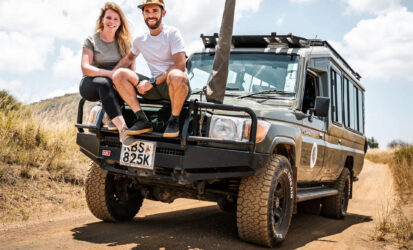


Starting and ending in Nairobi, this action-packed Kenya and Tanzania safari will take you to the wonderful parks and reserves that span East Africa’s Great Rift Valley. Lake Nakuru National Park, M

Price From


Nature knows no borders, so take your African safari across nations and explore the natural wonders of both Kenya and Tanzania. Taking in a wide range of landscapes and ecosystems across two countries

Price From
The biggest movement of land animals on the planet takes place across the Serengeti and the Masai Mara. One and a half million wildebeest, zebra, gazelle, and other sweep through these vast landscapes
Price From
Starting and ending in Nairobi, this action-packed Kenya and Tanzania safari will take you to the wonderful parks and reserves that span East Africa’s Great Rift Valley. Lake Nakuru National Park, M
Price From
Nature knows no borders, so take your African safari across nations and explore the natural wonders of both Kenya and Tanzania. Taking in a wide range of landscapes and ecosystems across two countries
Price From
If you don't want to miss useful and interesting articles, leave us your email.
Also you will be the first to know about all discounts and offers.


Personalized service by travel experts with first-hand knowledge

Customizable tours to your preference

400+ 5-star TripAdvisor and Google reviews

Booking Security - Money - back guarantee & 24/7 support


Click one of our representatives below to chat on WhatsApp