Few places capture the essence of wild Africa quite like the Serengeti. Stretching across Tanzania’s northern plains and spilling into Kenya’s Maasai Mara, this legendary ecosystem is where ancient rhythms still dictate the flow of life. The word “Serengeti” means “endless plains” in Maasai, and once you’ve stood amid its golden grasslands beneath a vast African sky, you’ll understand why.
A Serengeti safari isn’t just about ticking off the Big Five, it’s about witnessing one of the planet’s last great natural spectacles, the Great Migration, and feeling small in the best possible way. Whether you’re watching thousands of wildebeest thunder across the Mara River, spotting a leopard draped over an acacia branch, or sipping sundowners as the horizon blushes pink, the Serengeti holds a kind of magic that defies description.
This guide unpacks everything you need to know: from where to go and when to visit, to what it costs and how to plan the perfect trip.

The Serengeti lies in northern Tanzania, bordered by the Ngorongoro Conservation Area to the southeast, the Maswa Game Reserve to the southwest, and Kenya’s Masai Mara to the north. Together, these protected areas form the Serengeti-Mara ecosystem, one of the most biodiverse and ecologically intact regions on Earth.
Covering nearly 14,700 square kilometers (5,700 square miles), the Serengeti is a land of open plains, ancient granite kopjes, acacia woodlands, and meandering rivers. It’s the heart of the Great Rift Valley, where volcanic soils and seasonal rainfall sustain millions of animals. The park is divided into distinct regions, each with its own character and appeal, from predator-rich savannahs to remote wilderness zones where few travelers venture.

A Serengeti safari can look dramatically different depending on where you base yourself. The park is vast, and each area offers unique landscapes, wildlife experiences, and seasonal highlights.
The Central Serengeti, often referred to as the Seronera region, is the park’s beating heart. Its network of river valleys and grassy plains supports exceptional year-round game viewing. This is where you’re most likely to see all the major predators, lions, leopards, and cheetahs, as well as elephants, giraffes, and herds of antelope.
The Seronera area is ideal for first-time safari-goers. It offers a mix of mid-range and luxury lodges, permanent tented camps, and even mobile options that follow the wildlife. The region’s airstrip also makes it easily accessible from Arusha by light aircraft.
If you’ve ever seen footage of wildebeest leaping across a crocodile-infested river, it was filmed here. The Northern Serengeti stretches from the Lobo Hills to the Mara River on the Kenyan border. It’s the least crowded part of the park, offering a sense of remoteness and drama that few places can match.
Between July and October, this is where the Great Migration herds gather to cross the Mara River, one of nature’s most exhilarating events. But even outside migration season, the area remains spectacular, with large prides of lion, elephant herds, and rolling hills dotted with fig trees.
The Western Corridor follows the Grumeti River as it snakes toward Lake Victoria. This region is particularly lush, with riverine forests and open grasslands that attract large numbers of animals.
From May to July, the Great Migration sweeps through here, and the Grumeti River crossings offer a quieter, less crowded alternative to the Mara crossings in the north. Resident wildlife, from hippos and crocodiles to colobus monkeys and hyena, makes it worth visiting at any time of year.
The Southern Serengeti is where the Great Migration begins each year. Between December and March, over two million wildebeest, zebra, and gazelle spread across these plains to calve, and where countless predators follow in their wake.
This is the Serengeti at its most dramatic: lions hunting under storm-lit skies, cheetahs sprinting across green plains, and newborn calves wobbling to their feet moments after birth. Outside of calving season, the area remains peaceful, with fewer visitors and sweeping views of untouched wilderness.
Once a restricted research zone closed to the public for more than two decades, the Namiri Plains have become one of the Serengeti’s most extraordinary success stories. This remote corner of the eastern Serengeti was initially set aside for big cat conservation, and today it still carries that legacy. Cheetahs rule here, often seen sprinting after gazelles across the open plains, while lions sprawl atop sun-warmed termite mounds and leopards melt into the acacia shadows.
With only a handful of small, high-end camps allowed to operate, Namiri remains blissfully untouched, the kind of place where you can drive for hours without seeing another vehicle. The atmosphere is raw and elemental, defined by the whisper of the wind through the grass and the distant roar of a lion at dusk.
The Serengeti is a year-round destination, but your experience will depend on what you want to see. The region’s weather patterns are defined by two rainy seasons, the “short rains” in November and December, and the “long rains” from March to May, with dry, sunny months in between.

The Great Migration is a year-round cycle, but the drama shifts across the Serengeti with the changing seasons. From December to March, the Southern Serengeti’s Ndutu region transforms into a vast nursery. More than half a million wildebeest calves are born within a few short weeks, drawing predators from every direction. The plains glow with new life and electric tension, cheetahs chase through the emerald grass, hyenas patrol the edges of herds, and lions lie in wait beneath acacia trees. It’s one of nature’s most extraordinary displays, where the beauty of renewal meets the rawness of survival.
As the rains fade, the herds begin their long trek northward, following the scent of rain and fresh pasture. From May to July, they surge through the Western Corridor, crossing the crocodile-infested Grumeti River, then push onward toward the Mara River in the north. Between July and October, the Great Migration reaches its most iconic phase as wildebeest and zebra face the perilous river crossings of the Northern Serengeti, a true spectacle of courage and instinct. When the rains return in late October and November, the herds turn south again, retracing their ancient path toward the calving grounds.
When it comes to general game viewing, the Serengeti offers something special in every season, but each brings a distinct mood and rhythm to the landscape. From June to October, the long dry season delivers the most dependable wildlife sightings. Water becomes scarce, drawing animals in large numbers to rivers and waterholes, while the thinning grass makes it easier to spot predators on the prowl. The days are warm and bright, the skies a flawless blue, and the crisp mornings perfect for early game drives. It’s also peak safari season, when the Serengeti hums with life and energy at every turn.
From November to April, the rains return, painting the plains in a lush, emerald hue. This “green season” is quieter, with fewer visitors and a more tranquil pace. It’s an exceptional time for birdwatchers (migratory species arrive in dazzling plumage) and for photographers seeking dramatic skies and vibrant contrasts. Newborn animals add a tender note to the wilderness, and the afternoon storms lend the landscape a cinematic beauty. Whether you prefer the clarity and abundance of the dry season or the renewal and serenity of the rains, the Serengeti rewards travelers year-round.

A Serengeti safari can range from moderately priced to ultra-luxurious, depending on your travel style, timing, and accommodation choice.
While the Serengeti is a premium destination, it delivers extraordinary value: unrivaled wildlife, vast open spaces, and the kind of memories that stay with you forever.

A Serengeti safari pairs beautifully with other iconic East African destinations, allowing travelers to balance adventure with relaxation or cultural immersion.
Just a few hours’ drive from the Serengeti, the Ngorongoro Crater is one of Africa’s most awe-inspiring natural wonders and the perfect complement to a Serengeti safari. Formed from a collapsed volcano millions of years ago, this UNESCO World Heritage Site shelters an astonishing concentration of wildlife within its steep, green walls. On the crater floor, you can spot nearly every major African species, from black rhinos grazing near the Lerai Forest to prides of lion lounging in the sun and herds of zebra and wildebeest scattered across the shimmering soda lake. The setting feels almost mythical, a self-contained Eden where every game drive reveals something extraordinary.
Pairing the Serengeti with the Ngorongoro Crater offers travelers the best of both worlds: the vast, open drama of the plains and the intimate, amphitheater-like atmosphere of the crater. The journey between the two is a scenic adventure in itself, passing through highland coffee farms, Maasai villages, and panoramic viewpoints. Many travelers choose to begin their safari in Ngorongoro before continuing west to the Serengeti, following the same ancient migration route the wildlife takes each year.
Both Tarangire and Lake Manyara National Parks make superb companions to a Serengeti safari, offering contrasting scenery and a more intimate scale that beautifully rounds out a Northern Tanzania itinerary. Tarangire, often called the “Land of Giants,” is famous for its enormous baobab trees and vast elephant herds that gather along the Tarangire River, especially in the dry season. The park has an almost timeless feel, a place where the light turns golden over ancient trees and the sound of trumpeting elephants echoes across the plains. It’s quieter than the Serengeti but equally rewarding, with large populations of buffalo, wildebeest, and predators, as well as superb birdlife.
Lake Manyara, by contrast, offers a completely different atmosphere. At the base of the Great Rift Valley escarpment, this lush, green park is a sanctuary of groundwater forests, sparkling soda lakes, and acacia woodlands. Its shores are often pink with flamingos, and its fig trees are the famous haunt of tree-climbing lions, one of Africa’s most unusual wildlife spectacles. The park’s small size makes it perfect for a half- or full-day exploration en route to or from the Serengeti, and its scenic diversity provides an ideal introduction to Tanzania’s landscapes before venturing into the vastness of the plains.
After the dust and drama of a Serengeti safari, few experiences feel more indulgent than retreating to the white-sand beaches and warm, turquoise waters of Zanzibar or Tanzania’s mainland coast. Zanzibar, known as the “Spice Island,” is a place of sensory delight, where the scent of cloves hangs in the air, coral reefs shimmer just offshore, and the rhythm of Swahili culture fills the narrow streets of Stone Town. Days here unfold slowly: snorkeling among tropical fish, wandering through spice plantations, or simply watching dhows glide across a sunlit horizon.
Pairing Zanzibar or the Tanzanian coast with a Serengeti safari creates a perfectly balanced itinerary, one that marries the thrill of adventure with complete relaxation. Most travelers fly directly from the Serengeti to Zanzibar, swapping game drives for hammocks and wildlife calls for ocean breezes within a single afternoon. It’s a seamless transition from savannah to sea, ideal for honeymooners, families, or anyone wanting to reflect on their safari surrounded by tropical serenity.
For travelers seeking to extend their Serengeti safari into an even grander journey, Kenya’s Maasai Mara is the ultimate companion destination. Sharing the same ecosystem across an unfenced border, the Mara is the northern continuation of the Serengeti plains, a landscape of sweeping grasslands, acacia-dotted horizons, and abundant wildlife. Between July and October, this region comes alive as the Great Migration herds surge northward, following the rains and crossing the Mara River in dramatic scenes of survival and instinct. It’s a photographer’s paradise, where golden light illuminates vast herds, and the air vibrates with the energy of movement and life.
Combining the Serengeti and Masai Mara allows travelers to witness two perspectives of one extraordinary phenomenon, the same wildlife crossing between nations, guided by ancient rhythms that ignore human borders. The two destinations complement each other beautifully: Tanzania’s Serengeti offers vast, untamed wilderness and a deeper sense of solitude, while Kenya’s Mara delivers exceptional density of game and world-renowned lodges and camps.

A Serengeti safari can be as adventurous or indulgent as you wish, tailored to every type of traveler. Families can enjoy private vehicles, child-friendly guides, and lodges with swimming pools and educational activities designed to spark a lifelong love of wildlife.
Photographers can opt for mobile camps that follow the Great Migration, ensuring front-row seats to nature’s most cinematic moments, with expert guides who understand light, behavior, and positioning. Honeymooners, meanwhile, can choose intimate tented suites tucked away in remote corners of the park, where candlelit dinners are served under the stars and the sounds of the bush become a private soundtrack.

Accommodation in the Serengeti is as diverse and awe-inspiring as the landscape itself. From elegant tented camps that embrace the romance of the wild to contemporary lodges that blend seamlessly with the environment, each stay brings you closer to the pulse of the plains.
Most camps are designed to immerse guests in the natural rhythm of the park, open-air lounges that frame endless views, evenings lit by lanterns and starlight, and the sounds of the night reminding you just how alive the wilderness is. You can expect exceptional comfort, fine dining, and warm Tanzanian hospitality, all delivered with an authenticity that never detracts from the raw beauty outside your door.

The best camps fill up a year in advance during peak migration months (July–October). Secure your spot early to ensure access to prime viewing locations.
While driving safaris are scenic, distances between parks are long. Light aircraft transfers save time and offer stunning aerial views of the landscape.
The Serengeti offers everything from rustic tented camps to opulent lodges. Mobile camps provide the most intimate experience and often position you closest to migration activity.
Neutral-colored clothing (khaki, beige, olive) is ideal. Bring layers, mornings can be cool, afternoons hot. Don’t forget sunscreen, insect repellent, binoculars, and a good camera.
Always maintain a safe distance, avoid loud noises, and follow your guide’s instructions. The Serengeti is a wild environment, your safety and the animals’ wellbeing go hand in hand.
For a once-in-a-lifetime view, take a dawn hot-air balloon ride over the plains. You’ll glide silently above herds of elephants, giraffes, and wildebeest as the sun rises, it’s worth every cent.
Choose operators and lodges that support conservation and community initiatives. Many lodges in the Serengeti fund anti-poaching programs, local schools, and sustainable energy projects.
A Serengeti safari is more than a holiday, it’s a return to something primal and pure. Watching the migration sweep across the plains connects you to the earth’s oldest cycles, reminding you that life, in all its beauty and brutality, still moves to the rhythm of nature here.
The Serengeti remains one of the last true wildernesses. It’s a place where every sunrise feels like the first, and every sunset leaves you changed.


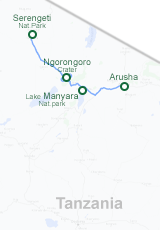
This thrilling 5-day safari will take you to Tanzania’s top safari destinations—the Serengeti, Ngorongoro Crater and Lake Manyara—and you will overnight at some beautifully-located safari lodges
Price From


Jambo! Welcome to Tanzania. Africa Flash McTours is proud to present our 7-day Serengeti Migration Magic Safari. This tour has been designed to enhance your chanc
Price From


Jambo! Welcome to Tanzania. Africa Flash McTours proudly presents our 4-day Over and Above Serengeti tour, designed especially for those with limited time or lookin
Price From
This thrilling 5-day safari will take you to Tanzania’s top safari destinations—the Serengeti, Ngorongoro Crater and Lake Manyara—and you will overnight at some beautifully-located safari lodges
Price From
Jambo! Welcome to Tanzania. Africa Flash McTours is proud to present our 7-day Serengeti Migration Magic Safari. This tour has been designed to enhance your chanc
Price From
Jambo! Welcome to Tanzania. Africa Flash McTours proudly presents our 4-day Over and Above Serengeti tour, designed especially for those with limited time or lookin
Price From
If you don't want to miss useful and interesting articles, leave us your email.
Also you will be the first to know about all discounts and offers.


Personalized service by travel experts with first-hand knowledge

Customizable tours to your preference

400+ 5-star TripAdvisor and Google reviews

Booking Security - Money - back guarantee & 24/7 support


Click one of our representatives below to chat on WhatsApp