Traditional Kenyan food is more than something you’ll try between game drives, it can become part of the safari experience itself. A morning in the Masai Mara might begin with a bush breakfast overlooking the plains, while another day could include sharing tea during a cultural visit or returning to camp for a dinner inspired by local ingredients. For travelers wondering about what to eat in Kenya, the answer is about more than a list of dishes. It’s also about where, when, and with whom you experience them.
During a Kenya safari, you’ll encounter staples such as ugali, nyama choma, sukuma wiki, chapati, and mandazi, while journeys toward the Indian Ocean introduce the spices, coconut, seafood, and rice dishes of the Swahili coast. Some meals will be served at your safari lodge, others outdoors in the bush, and still others might be discovered in a Nairobi restaurant or during a cultural experience.
This guide explores what makes Kenyan cuisine distinctive, the dishes worth knowing before you arrive, and how food fits naturally into a safari itinerary. If you’re still planning the wider journey, our Kenya: A Comprehensive Safari Guide is a useful place to start.
Kenyan cuisine reflects the extraordinary cultural and geographical diversity of the country. Inland, Bantu and Nilotic food traditions have long centered on filling staples accompanied by vegetables, beans, meat, or stews, while pastoralist communities in the country’s drier northern regions have traditionally placed greater emphasis on livestock, milk, and meat. Along the Indian Ocean, centuries of interaction with Arab, Persian, Indian, and other trading communities transformed East African food, introducing spices, coconut, and fragrant rice dishes such as pilau.
This means there’s no single menu that represents the entire country. Travel from the highlands to northern Kenya and then to the coast, and what you eat changes along with the landscapes and communities you encounter. That regional variation is one of the reasons Kenyan food culture fits so naturally into a multi-region safari. Exploring Kenya’s cultural encounters alongside its wildlife can give you a much broader understanding of the country than game drives alone.
You could spend weeks exploring regional Kenyan cuisine, but these are some of the dishes first-time visitors are most likely to encounter at safari camps, restaurants, cultural visits, and stops along the way.
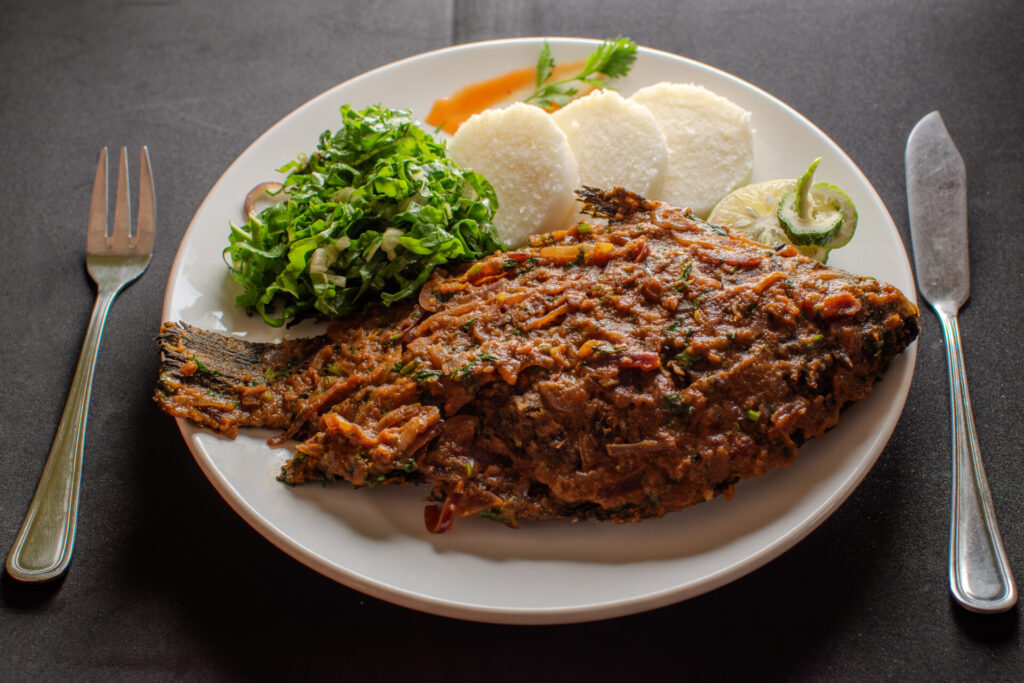
So, what is ugali? It’s a firm maize-flour porridge cooked with water until it develops a dense, dough-like consistency. Rather than being eaten by itself, a small portion is traditionally shaped by hand and used to scoop up meat, stew, beans, or vegetables.
Ugali is one of the most widely eaten staples in Kenya, cutting across regions and communities. If you sit down to a traditional Kenyan meal during your safari, there’s a good chance you’ll encounter it at least once.
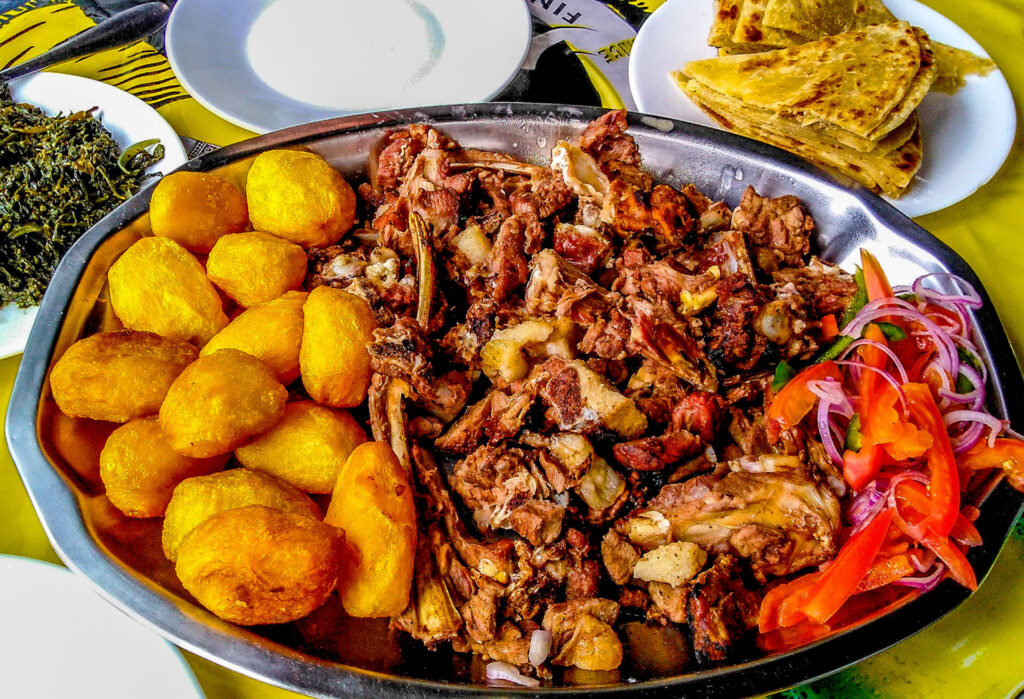
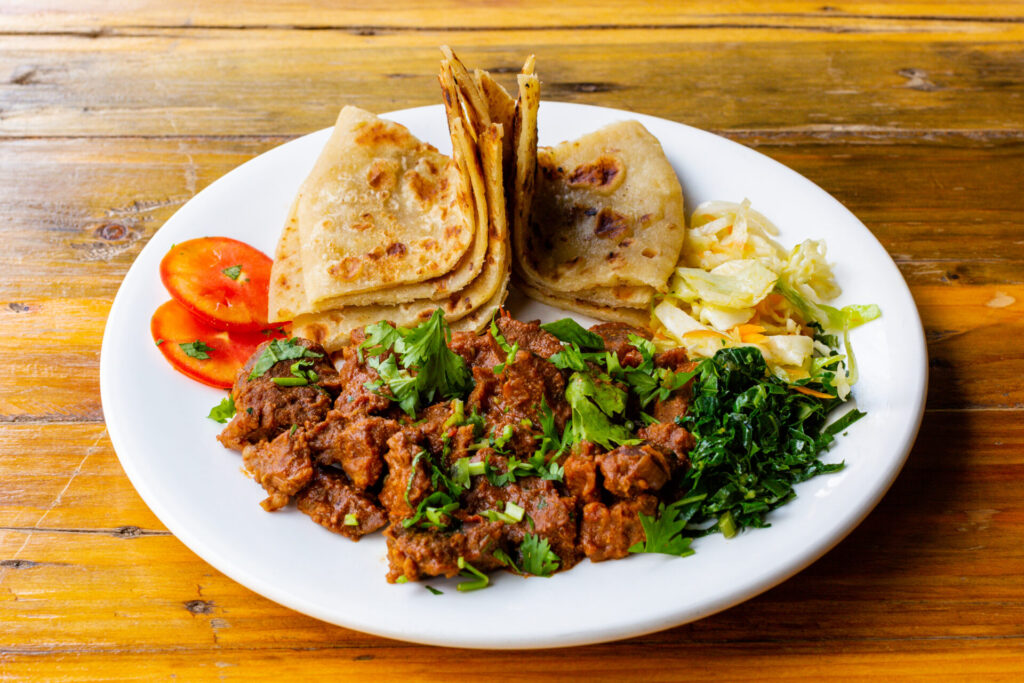
Nyama choma literally means “roasted meat” and usually consists of goat or beef slowly grilled over an open flame. But describing it simply as barbecue misses much of what makes it important: nyama choma is a social meal, often shared among friends and family over a long afternoon or evening.
Across Kenya, you’ll find dedicated nyama choma restaurants and informal “joints,” while safari camps may serve their own interpretation during an outdoor dinner or barbecue. For many visitors, it’s one of the best foods in Kenya to experience communally rather than simply order as an individual dish.
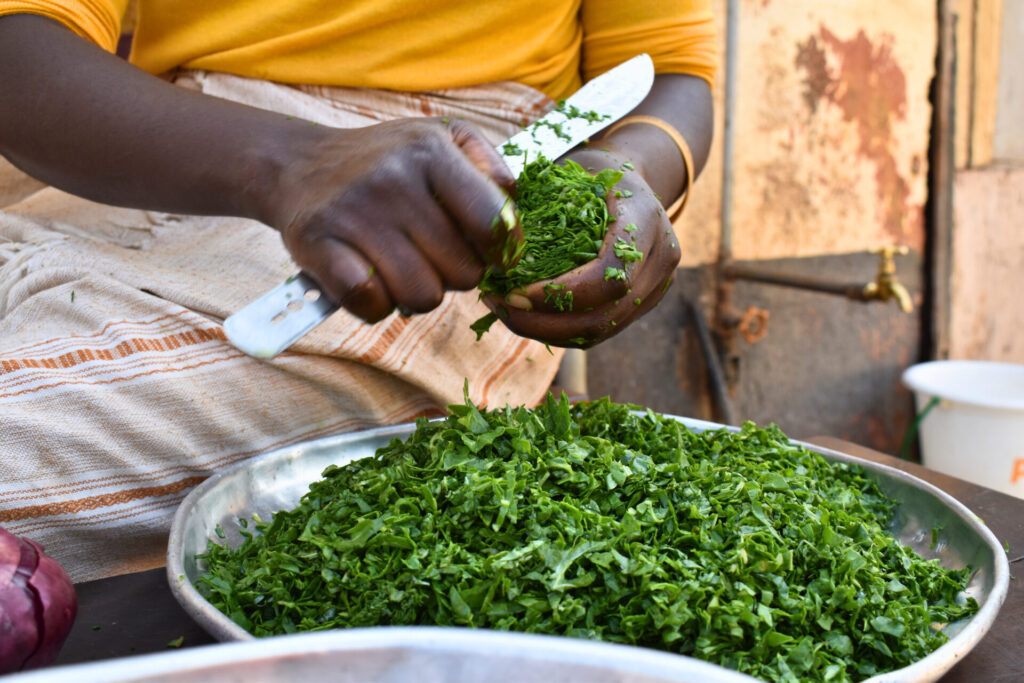
Sukuma wiki is made from leafy greens, usually collard greens or kale, sautéed with ingredients such as onion and tomato. It’s frequently served alongside ugali, meat, beans, or stew and is an everyday feature of Kenyan home cooking.
Its name is commonly translated from Swahili as “push the week,” referring to its traditional role as an inexpensive and readily available food that helps stretch a household budget until the end of the week. It’s a small linguistic detail that says something much bigger about the everyday role food plays in Kenyan life.
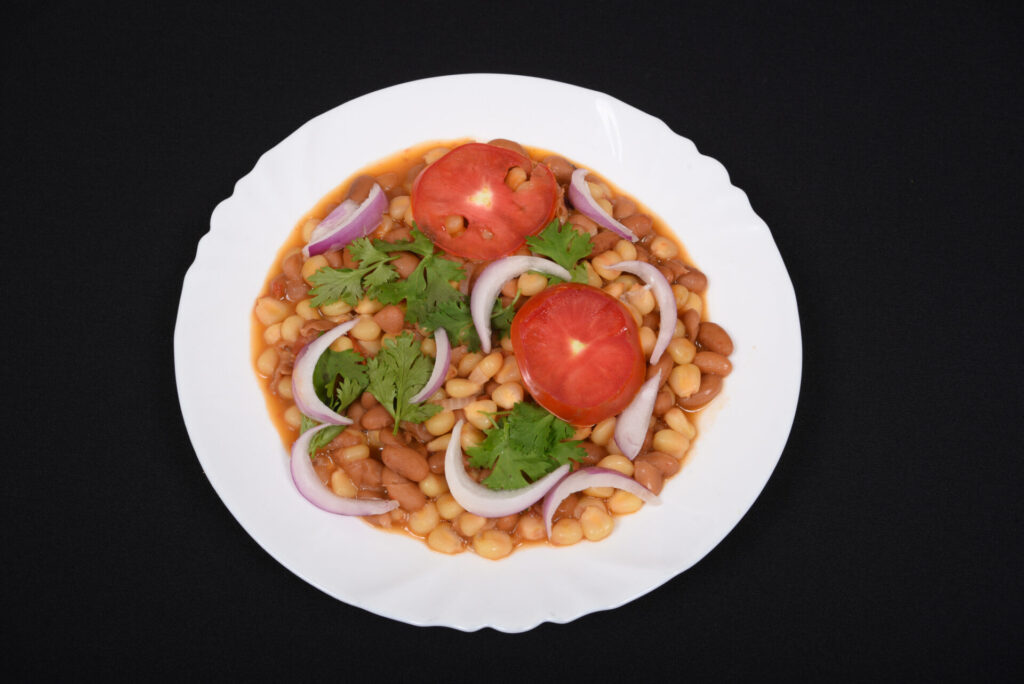
Githeri is a simple, filling combination of maize and beans, sometimes cooked with vegetables, potatoes, or additional seasonings. Traditionally associated particularly with Kikuyu cuisine, it remains a familiar home-cooked meal across Kenya. Where nyama choma can feel celebratory and social, githeri represents another side of Kenyan food: practical, nourishing everyday cooking.
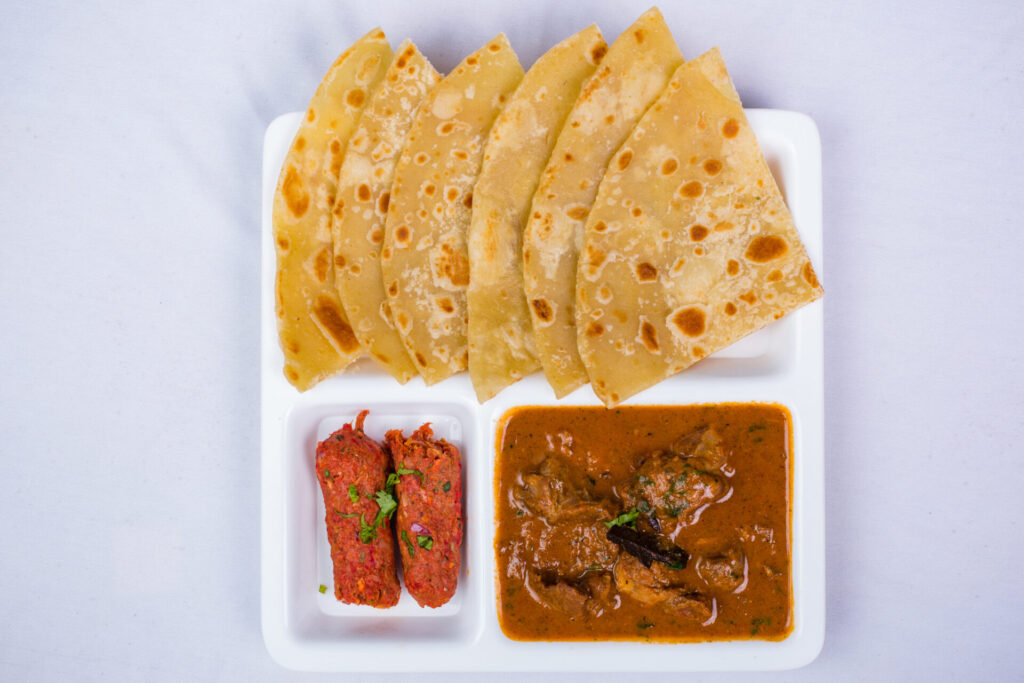
Search for chapati Kenya and you’ll find a flatbread that reveals the influence of the Indian subcontinent on East African cuisine. Kenyan chapati is soft, layered, and cooked on a hot griddle, and it’s served alongside stews, meat, beans, vegetables, and other dishes.
Mandazi, meanwhile, is a lightly sweet fried dough with a soft interior, commonly enjoyed with tea or as a breakfast snack. Both chapati and mandazi frequently appear on breakfast tables in Kenya, including at safari camps, making them among the easiest local foods to try without seeking out a specialist restaurant.
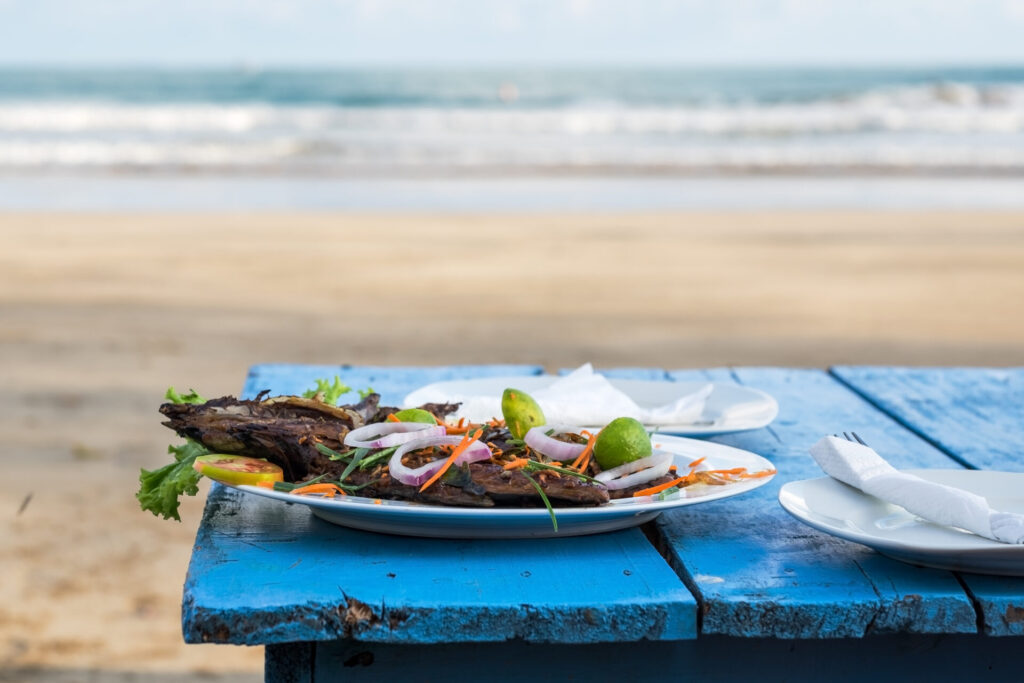
The story of pilau Kenya is closely tied to centuries of Indian Ocean trade. Rice is cooked with aromatic spices and often meat, creating a deeply flavored dish that reflects Arab and Indian influences on coastal cooking.
Travel toward Mombasa, Lamu, or the wider coast and you’ll encounter Swahili food that can feel noticeably different from the cuisine of inland Kenya. Coconut curries, seafood, rice, spices, and tropical ingredients feature much more prominently, with Lamu in particular bringing a rich culinary heritage. If your safari finishes with a beach extension, don’t treat the coast simply as somewhere to relax. The change in cuisine is part of the journey.
Tea in Kenya isn’t reserved for afternoon tea. Milky chai, often sweetened and sometimes prepared with spices, is part of everyday life and can appear at breakfast, during a mid-morning pause, or when welcoming guests.
Kenya is also one of the world’s notable coffee-producing countries, particularly in its fertile highland regions. Depending on your itinerary, it’s possible to visit a coffee or tea estate and see the journey from plant to cup, a very different experience from your morning coffee overlooking the bush.
The most memorable safari food experiences aren’t always the most elaborate meals. Often, it’s the setting that transforms them: breakfast after watching the sunrise, drinks as elephants move across a distant plain, or a shared meal that introduces you to another side of Kenyan life. On a Flash McTours journey, these experiences can become part of the story of the itinerary rather than something that happens separately from it.

Imagine leaving camp before sunrise, spending the first hours of the morning searching for wildlife, and then pulling into a beautiful spot to discover breakfast waiting in the bush. Depending on the camp and itinerary, staff may set up tables, coffee, tea, fruit, pastries, eggs, and hot dishes so breakfast becomes an experience rather than simply a meal before the next activity.
Sundowners create a similar sense of place at the other end of the day. Your guide may stop at a viewpoint or quiet spot as the light begins to soften, allowing you to enjoy a drink and snacks while watching the sun disappear across the landscape. They’re simple traditions, but travelers often remember these moments long after they’ve forgotten what was on the plate.

Most Kenyan safari camps and lodges serve a combination of international favorites and Kenyan dishes, so travelers who prefer familiar food won’t be expected to eat local cuisine at every meal. At the same time, menus often incorporate dishes such as ugali, sukuma wiki, chapati, or nyama choma alongside more familiar options.
Camp chefs frequently build menus around fresh and locally available produce, and many properties will happily introduce more Kenyan dishes if guests are interested. Let us know when we’re planning your itinerary if local food is something you’d particularly like to explore. Dietary requirements can generally be accommodated too, provided camps receive advance notice.
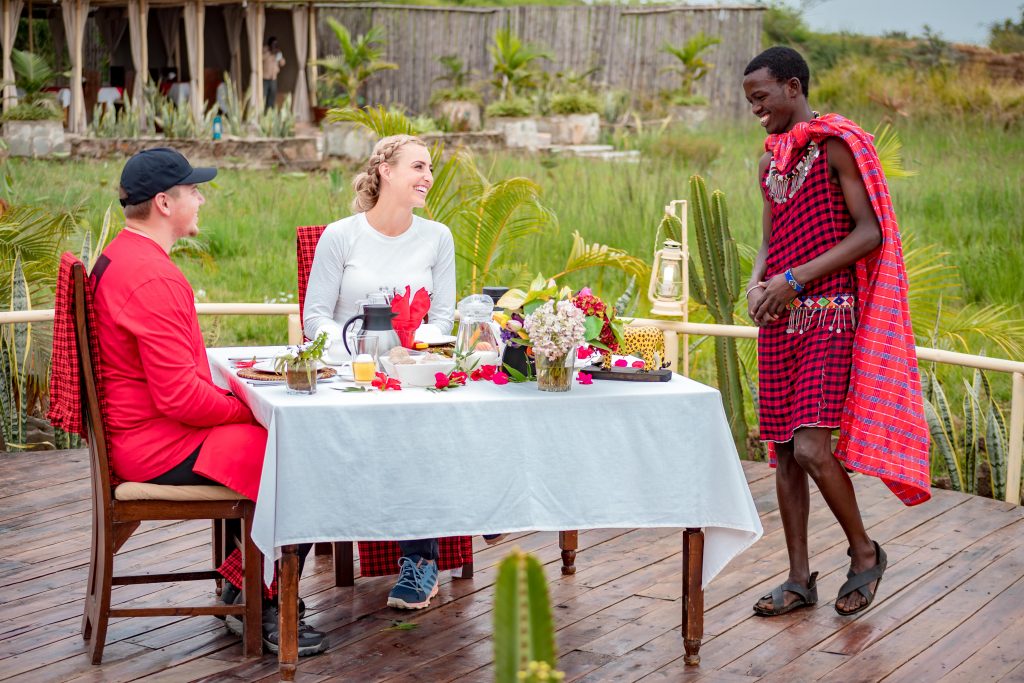
A safari through the Masai Mara or Samburu National Reserve can also create opportunities to learn about the communities whose histories are inseparable from these landscapes.
During thoughtfully organized cultural visits, sharing tea, learning about traditional foods, or spending time talking with community members can have insights that are impossible to gain from a game-driven vehicle. The value isn’t in treating a meal as a performance for visitors, but in the conversation and cultural exchange that happens around it.
Select Flash McTours itineraries incorporate community and cultural experiences into the wider journey. Explore our cultural excursions to see how experiences beyond wildlife can become part of your safari.
Most international Kenya itineraries begin or end in Nairobi, and it’s worth using that time to explore the country’s food beyond the safari circuit. The capital brings together cuisines from across Kenya, making it possible to try everything from nyama choma and traditional stews to contemporary interpretations of regional dishes.
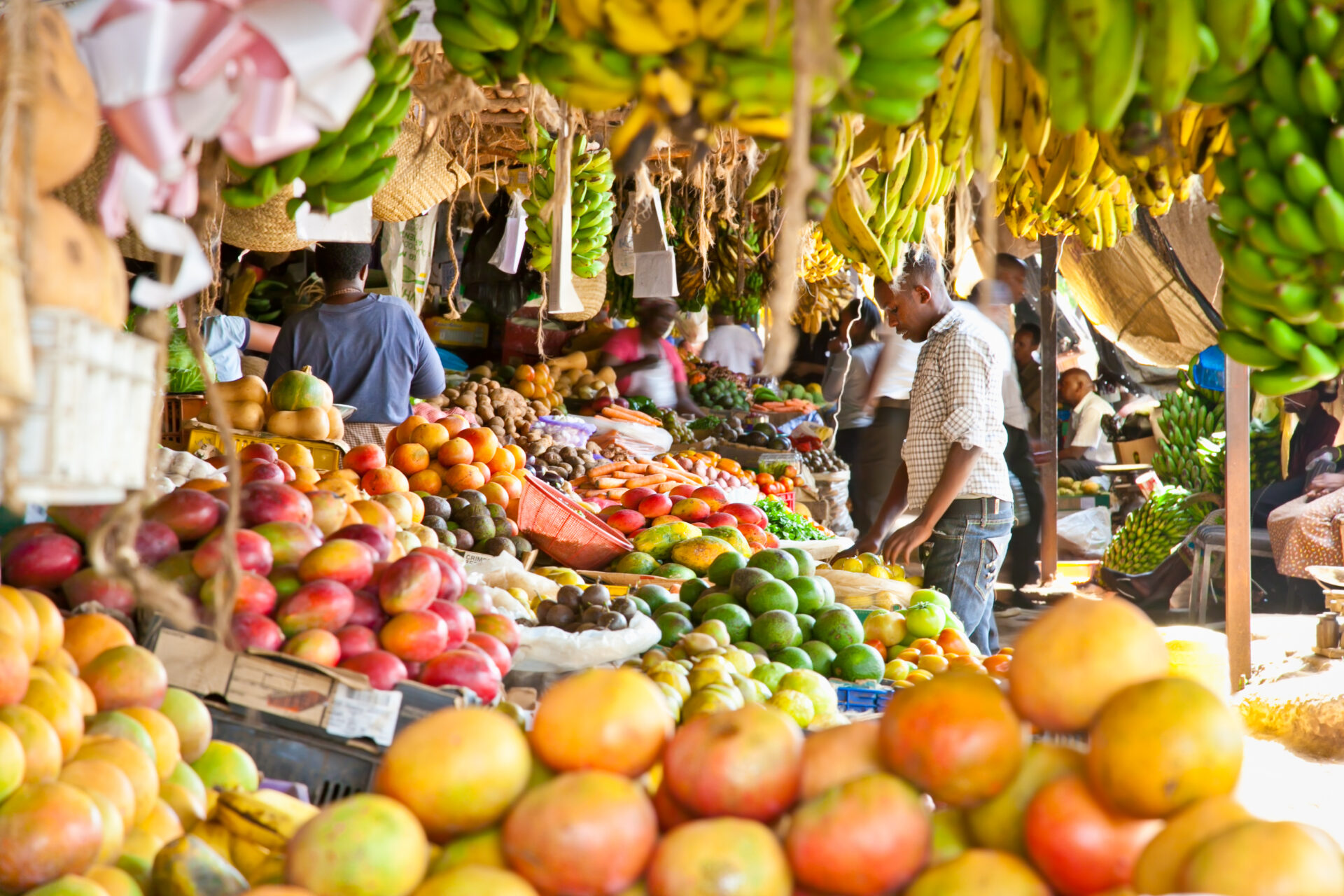
Markets can add another dimension, introducing you to local fruit, vegetables, spices, tea, and coffee. Even if you only have one night in the city, dinner at a good Kenyan restaurant can be a fitting introduction to the trip, or one final taste before flying home.

Travelers often have practical questions about what they’ll actually eat in Kenya. Here are answers to some of the most common.
What is Kenya’s national dish?
Kenya doesn’t have one officially designated national dish, and its regional cuisines are too diverse to reduce to a single plate. However, ugali served with nyama choma and sukuma wiki is probably the closest thing to a universally recognized Kenyan combination.
What are five traditional foods in Kenya?
Five of the best-known examples of traditional food in Kenya are ugali, nyama choma, sukuma wiki, githeri, and chapati. Travelers may encounter all five during a safari, although what’s served varies according to the region, lodge, and style of itinerary.
What foods are native to Kenya?
Kenyan food traditions include maize and millet-based staples, beans, leafy vegetables, meat, milk, and locally grown produce, with considerable variation between communities. Coastal cuisine developed differently through centuries of Indian Ocean trade, incorporating ingredients and techniques from Arab, Persian, Indian, and other influences.
What do Kenyans eat for breakfast?
Breakfast varies widely between households, but chai is a common feature, often accompanied by chapati or mandazi. Porridge and eggs are also eaten, while safari lodges generally have larger breakfasts combining Kenyan and international options.
Is Kenyan food spicy?
Most inland Kenyan food isn’t particularly hot, although spices and chilies may be available or incorporated into individual dishes. Food along the Swahili coast tends to be more aromatic and heavily spiced because of the region’s centuries-old Arab and Indian culinary influences.
“Spiced” doesn’t necessarily mean extremely hot, either. Coastal cooking often relies on combinations of cardamom, cloves, cinnamon, cumin, and other aromatics for flavor rather than simply chili heat.
Is it safe for travelers to eat local food in Kenya?
Yes, provided you follow the same sensible precautions you would when traveling elsewhere. Eat freshly prepared food at reputable camps, lodges, restaurants, and established food venues, drink bottled or properly filtered water, and be more cautious with food that appears to have been sitting unrefrigerated for long periods.
You don’t need to avoid Kenyan cuisine to stay healthy. Good food hygiene and normal travel-health precautions are far more useful than restricting yourself to familiar foods throughout the trip.
How can I avoid getting sick eating local food in Kenya?
Choose food that has been freshly cooked and served hot, wash or sanitize your hands before eating, and use bottled or filtered water where recommended. Be cautious with raw foods when you’re unsure how they’ve been washed or stored, and follow any travel-health advice given by your doctor before departure. Reputable safari camps and lodges are accustomed to catering for international travelers and generally maintain careful food-handling standards.
What is Kenya’s most eaten food?
Ugali is one of Kenya’s most widely consumed everyday staples. Its affordability, simplicity, and ability to accompany vegetables, beans, meat, and stews have made it an important part of meals across many Kenyan households.
What is Kenya’s famous food?
If you asked Kenyans and visitors to name one particularly famous meal, nyama choma would almost certainly be among the answers. The combination of grilled meat, ugali, and sukuma wiki captures both the flavors and the communal nature of Kenyan dining.
Some of the details that stay with you after a safari have nothing to do with the wildlife checklist. It might be the smell of coffee as the sun rises over the Mara, your first taste of ugali beside a campfire, tea shared during a cultural visit, or a long bush breakfast after an unforgettable morning game drive. We build our itineraries so experiences like these can become part of the journey rather than an afterthought.
Whether you’re traveling as a couple, with friends, or planning one of our Kenya family safaris, we can combine wildlife, landscapes, culture, and food into a journey that gives you a broader taste of the country. Browse our Kenya safaris and start planning a trip that lets you experience Kenya at the table as well as from the safari vehicle.








Jambo! Welcome to Kenya. Our 6-day fly-in Kenyan wildlife safari package has been tailor-made to show visitors Kenya’s diverse wildlife, as found in the distinct habitats of Samburu National Par
Price From









On this exciting 13-day tour you will discover the very best of Kenya by visiting the most iconic and popular parks and reserves to see Africa’s sought-after wildlife on safari. Then explore Kenyaâ€

Price From





On this exciting 5-day safari you will visit some of Kenya’s most popular parks and reserves to see Africa’s sought-after wildlife. The Masai Mara National Reserve is one of the best game reserves

Price From
Jambo! Welcome to Kenya. Our 6-day fly-in Kenyan wildlife safari package has been tailor-made to show visitors Kenya’s diverse wildlife, as found in the distinct habitats of Samburu National Par
Price From
On this exciting 13-day tour you will discover the very best of Kenya by visiting the most iconic and popular parks and reserves to see Africa’s sought-after wildlife on safari. Then explore Kenyaâ€
Price From
On this exciting 5-day safari you will visit some of Kenya’s most popular parks and reserves to see Africa’s sought-after wildlife. The Masai Mara National Reserve is one of the best game reserves
Price From
If you don't want to miss useful and interesting articles, leave us your email.
Also you will be the first to know about all discounts and offers.









Personalized service by travel experts with first-hand knowledge

Customizable tours to your preference

400+ 5-star TripAdvisor and Google reviews

Booking Security - Money - back guarantee & 24/7 support